

The maritime sector accounts for nearly 90% of global trade and represents nearly 3% of global CO₂ emissions. To meet the targets set by the International Maritime Organisation (IMO), the sector will need to draw on a wide range of solutions: electrification, hydrogen, e-fuels, biofuels, energy efficiency, digital technology… but above all, it must accelerate innovation.
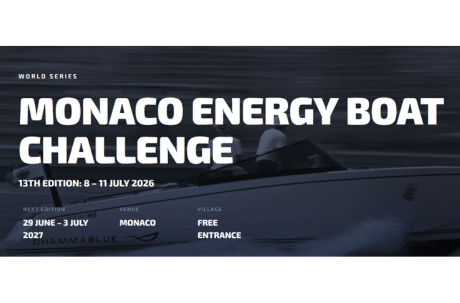
That is precisely the aim of the Monaco Energy Boat Challenge. Far more than just a competition, this event is a genuine laboratory for innovation where students, researchers, industry representatives and institutional stakeholders are experimenting with the technologies that will shape the future of maritime transport.
Throughout the event, the Capenergies teams were hard at work:
– Participation in conferences and round-table discussions on alternative fuels (Pierre Ceccaldi, Capenergies), hydrogen and decarbonisation pathways for the maritime sector. «All the energy contained in the fuels we are discussing, with the possible exception of nuclear power, comes from molecular hydrogen.»
– Contribution to discussions on various energy solutions, including nuclear power (Jean-Michel Ruggieri, CEA IRESNE), to support the transition in maritime transport. «The main challenge lies in establishing a regulatory framework in international maritime zones.”. »
– Jury (Raphael Rinaldi, Capenergies), alongside international experts, to assess the projects and innovations developed by student teams and young talent. (with the support of the Prince Albert II of Monaco Foundation)
– Meetings with industry representatives, researchers, start-ups, students and institutional partners involved in maritime innovation.
This year’s event has once again demonstrated that there is no single solution for decarbonising the maritime sector, but rather a range of complementary technologies, the development of which must be underpinned by research, experimentation and cooperation between stakeholders.
This is precisely Capenergies’ mission: to bring together businesses, research centres, local authorities and project leaders to accelerate the development and roll-out of innovations that will contribute to the energy transition.
A big thank you to the Monaco Yacht Club, at the Energy Transition Task Force (MTE) of the Principality of Monaco, the Prince Albert II of Monaco Foundation, the CEA, and all the organisers, partners, speakers and participants for the high standard of this year’s event and the fruitful discussions.
Congratulations also to the student teams, whose creativity, commitment and high standards of excellence show that the solutions of tomorrow are already setting sail.
Let us work together to ensure that innovation continues to drive the energy transition in the maritime sector.


